
What Bloodwork Should You Have During Perimenopause?
If you've started experiencing changes in your periods, sleep, mood, energy, weight or temperature regulation in your 40s, you may be wondering whether bloodwork can tell you if you're in perimenopause.
One of the most common questions I hear in practice is:
"Can we just test my hormones and see if I'm in perimenopause?"
While bloodwork can be incredibly helpful during perimenopause, hormone testing isn't usually the best way to diagnose it. Instead, bloodwork is often most useful for assessing your overall health and ruling out other conditions that can cause symptoms similar to perimenopause.
Let's look at what bloodwork may actually be worth discussing with your healthcare provider.
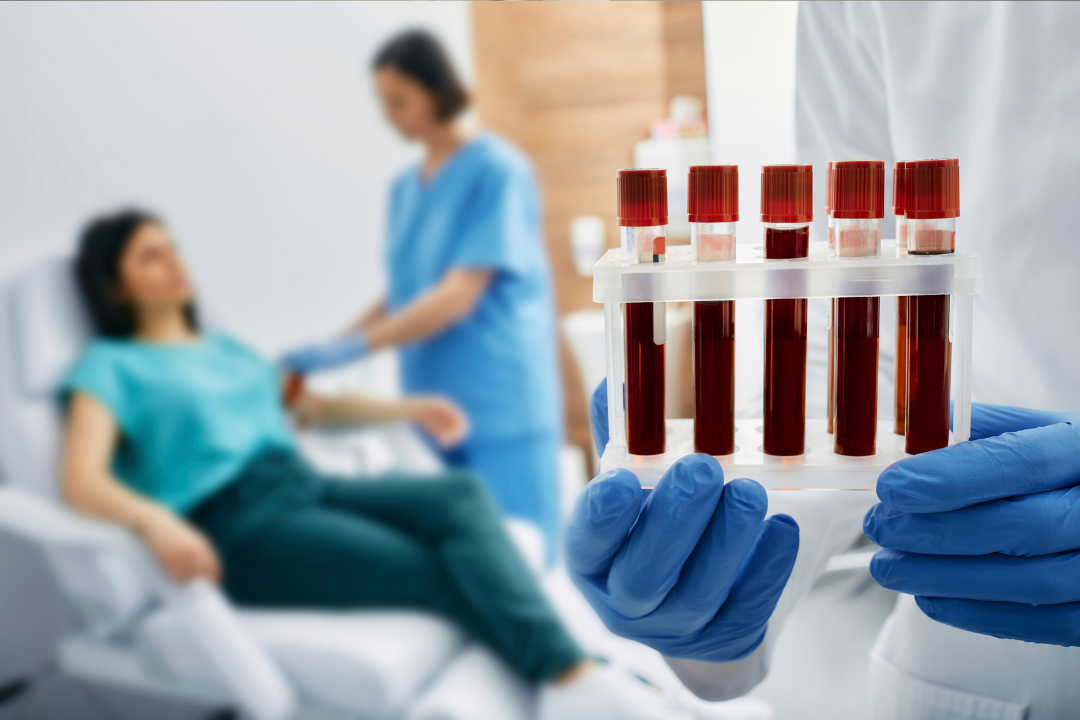
Do You Need a Blood Test to Diagnose Perimenopause?
Perimenopause is primarily a clinical diagnosis, meaning your healthcare provider looks at your age, symptoms and changes in your menstrual cycle rather than relying on a specific blood test.
During perimenopause, estrogen and progesterone production becomes increasingly variable. Follicle-stimulating hormone (FSH) can fluctuate significantly as well.
This means you could have an FSH or estradiol level that looks relatively normal one day and quite different at another point in your cycle.
A single hormone test is therefore just a snapshot of what your ovaries were doing at that particular moment.
For women over 45 with typical symptoms and menstrual cycle changes, hormone testing is generally not required to diagnose perimenopause.
There are exceptions. Hormone testing may be more appropriate when menopause is suspected before age 45, when periods have stopped unexpectedly at a younger age, or when the diagnosis isn't clear.
If Hormone Testing Isn't Necessary, Why Do Bloodwork?
Because not every symptom that develops in your 40s is caused by perimenopause.
Symptoms such as:
fatigue
brain fog
hair loss
weight changes
anxiety
low mood
poor sleep
heart palpitations
menstrual changes
feeling hot or cold
can occur during perimenopause, but they can also occur with thyroid disorders, iron deficiency, anemia, blood sugar dysregulation and other health conditions.
Bloodwork can help us look at the bigger picture.
1. Complete Blood Count (CBC)
A CBC looks at red blood cells, hemoglobin, white blood cells and platelets.
One reason this can be particularly relevant during perimenopause is that menstrual bleeding can change significantly.
Some women begin having:
heavier periods
longer periods
shorter cycles
more frequent bleeding
Over time, increased menstrual blood loss can contribute to iron deficiency and eventually iron-deficiency anemia.
A CBC can help identify anemia, but I often assess iron stores separately as well.
2. Ferritin and Iron Studies
Ferritin is a marker used to assess your body's stored iron.
Iron is particularly worth considering if you're experiencing symptoms such as:
fatigue
reduced exercise tolerance
hair shedding
weakness
headaches
dizziness
restless legs
If periods have become heavier or more frequent during perimenopause, iron status becomes even more important.
Depending on your history and results, additional testing such as serum iron, total iron-binding capacity (TIBC) and transferrin saturation may also be appropriate.
Importantly, you can have depleted iron stores before you develop obvious anemia on a CBC. That's why looking at ferritin can sometimes provide information that hemoglobin alone does not.
3. Thyroid Testing
There can be a surprising amount of overlap between symptoms of thyroid dysfunction and symptoms associated with perimenopause.
Both can be associated with changes in:
energy
body weight
mood
concentration
menstrual cycles
hair
temperature tolerance
heart rate
For this reason, thyroid function is often worth considering when someone presents with new symptoms in midlife.
TSH (thyroid-stimulating hormone) is typically the starting point for thyroid assessment. Depending on your symptoms, medical history and TSH result, additional thyroid testing may be appropriate.
The important point is that we don't want to automatically assume that every new symptom in your 40s is caused by your hormones.
4. Blood Sugar and Hemoglobin A1c
Metabolic health becomes increasingly important through the menopause transition and beyond.
Depending on your individual risk factors and health history, your healthcare provider may consider testing:
fasting glucose
hemoglobin A1c (HbA1c)
Hemoglobin A1c provides an estimate of average blood sugar levels over approximately the previous two to three months.
These markers can help screen for prediabetes and diabetes and provide useful information about your metabolic health.
5. Cholesterol and Lipid Panel
A lipid panel typically includes:
total cholesterol
LDL cholesterol
HDL cholesterol
triglycerides
Cardiovascular health becomes increasingly important as women move through menopause and into postmenopause.
Rather than looking at cholesterol numbers in isolation, they should be interpreted alongside other cardiovascular risk factors such as blood pressure, smoking status, family history, blood sugar and overall health.
Perimenopause can be a great time to establish a baseline and start paying closer attention to long-term cardiovascular health.
6. Vitamin B12
Vitamin B12 isn't necessarily a "perimenopause test," but it may be appropriate depending on your diet, medications, medical history and symptoms.
Low B12 can contribute to symptoms including fatigue and neurological symptoms, which can sometimes overlap with complaints attributed to perimenopause.
Whether it needs to be tested should be individualized rather than automatically included in every perimenopause panel.
7. Vitamin D
Vitamin D plays an important role in bone health, which becomes increasingly relevant as estrogen levels decline through menopause.
However, vitamin D testing isn't necessarily required for every healthy person.
Testing may be more useful when there are risk factors for deficiency, concerns about bone health, osteoporosis or other clinical indications.
Your healthcare provider can help determine whether testing your vitamin D level is appropriate.
8. What About FSH?
FSH is probably the blood test most commonly associated with menopause.
FSH stands for follicle-stimulating hormone. It is released by the pituitary gland and helps stimulate ovarian follicle development.
As ovarian function declines, FSH generally rises.
The problem during perimenopause is that FSH doesn't rise in a perfectly straight line.
Hormone production can fluctuate considerably from one cycle to another, which means FSH can fluctuate too.
You could therefore have an FSH level within the normal premenopausal range and still be experiencing perimenopause.
For this reason, routinely checking FSH in a woman over 45 with typical perimenopause symptoms usually doesn't provide as much useful information as people expect.
FSH testing becomes more useful when menopause or ovarian insufficiency is suspected at a younger age.
9. What About Estradiol?
Estradiol is the primary form of estrogen produced by the ovaries during the reproductive years.
It may seem logical to check estrogen when someone is experiencing symptoms of perimenopause, but estradiol has the same problem as FSH: it can fluctuate significantly during the menopause transition.
Some days or cycles, estrogen can actually be relatively high. At other times, it may be much lower.
This fluctuation is part of the reason symptoms can feel unpredictable.
An estradiol result therefore needs to be interpreted within the context of your age, menstrual cycle, medications and symptoms rather than being viewed as a simple "normal" or "low" result.
10. What About Progesterone?
Progesterone also becomes less predictable during perimenopause as ovulation becomes less consistent.
A progesterone test can sometimes be useful when we're trying to determine whether ovulation occurred during a particular menstrual cycle.
However, progesterone isn't generally needed to diagnose perimenopause.
The timing of the test also matters significantly. A random progesterone level without knowing where you are in your menstrual cycle can be difficult to interpret.
11. Do You Need Testosterone Tested During Perimenopause?
Testosterone testing may be considered when there is a specific clinical reason to investigate androgen levels, but it isn't a standard test for determining whether you're in perimenopause.
Changes in libido, energy or body composition also shouldn't automatically be attributed to a "low testosterone" result because these symptoms can have many different causes.
12. What About Cortisol Testing?
Cortisol isn't a routine blood test for diagnosing perimenopause.
Stress and sleep absolutely matter during the menopause transition, but routinely measuring cortisol doesn't necessarily tell us why someone is experiencing fatigue, stress or poor sleep.
Cortisol testing is generally most useful when there is a specific medical reason to investigate a disorder involving cortisol production.
So, What Bloodwork Should You Ask About During Perimenopause?
There isn't one universal "perimenopause blood panel" that every woman needs.
A more useful approach is to choose bloodwork based on your symptoms, menstrual history, medical history, medications, family history and health risks.
Depending on the individual, a discussion with your healthcare provider might include:
General health and symptom investigation
CBC
ferritin +/- iron studies
TSH +/- additional thyroid testing when indicated
vitamin B12 when indicated
vitamin D when indicated
Metabolic and cardiovascular health
fasting glucose and/or HbA1c
lipid panel
liver and kidney markers when clinically appropriate
Hormone testing when there is a specific indication
FSH
estradiol
prolactin
pregnancy testing
other hormone testing based on symptoms and menstrual history
The key is that more testing isn't necessarily better testing.
The goal should be to order tests that answer a specific clinical question and will actually change what we do next.
What If All of My Bloodwork Is "Normal"?
Normal bloodwork does not mean that your perimenopause symptoms aren't real.
If you're in the typical age range and experiencing symptoms such as changing periods, hot flashes, night sweats, sleep disruption, mood changes, brain fog or vaginal and urinary symptoms, normal bloodwork doesn't rule out perimenopause.
In fact, we often expect standard laboratory results to be normal.
Perimenopause is a transition in ovarian function rather than a disease that needs to produce an abnormal laboratory result.
Your symptoms, menstrual history and overall health picture matter.
When Should You Talk to a Healthcare Provider?
It's worth having a more thorough assessment if you're experiencing new or significant symptoms, particularly:
very heavy menstrual bleeding
bleeding between periods or after sex
periods stopping before age 45
significant or unexplained weight changes
persistent fatigue
new or worsening heart palpitations
significant changes in mood
symptoms that are interfering with sleep, work, exercise or quality of life
These symptoms don't necessarily indicate something serious, but they shouldn't automatically be dismissed as "just perimenopause" either.
Conclusion
Bloodwork can be very helpful during perimenopause, but perhaps not for the reason most people expect.
For most women in the typical age range, we don't need to repeatedly measure estrogen and FSH to prove that perimenopause is happening.
Instead, bloodwork can help us:
rule out other explanations for your symptoms
identify issues such as iron deficiency or thyroid dysfunction
assess metabolic and cardiovascular health
establish useful health baselines for the years ahead
Perimenopause care should ultimately be individualized. Your menstrual cycle, symptoms, medical history, family history, lifestyle and personal goals all help determine which investigations actually make sense for you.
If you're experiencing symptoms of perimenopause and aren't sure what testing or treatment options are appropriate, Dr. Brittany Jeffries, a Kelowna naturopathic doctor, can help you put the pieces together.
This article is for educational purposes only and is not intended to replace individualized medical advice, diagnosis or treatment.