
Estrogen Patch vs Estrogen Gel: What’s the Difference?
If you’re considering menopause hormone therapy (MHT), one of the first decisions you may encounter is how to take estrogen.
Two commonly used options are the estrogen patch and estrogen gel. Both deliver estradiol through the skin and into the bloodstream, but they differ in how they’re applied, how often you use them, and what may work best with your lifestyle.
As a naturopathic doctor in Kelowna who works with patients through perimenopause and menopause, I often find that there isn’t one option that is universally “better.” The goal is to find the form of estrogen that provides good symptom control, is well tolerated, and is easy for you to use consistently.
First, What Is Transdermal Estrogen?
Both estrogen patches and estrogen gels are forms of transdermal estrogen, meaning estrogen is absorbed through the skin and enters the bloodstream.
This is different from oral estrogen, which is swallowed and passes through the digestive system and liver before entering circulation.
Transdermal estrogen avoids this first-pass metabolism through the liver. This is one reason it may be preferred for some patients, particularly when there are risk factors for blood clots or certain cardiovascular concerns. Research and menopause guidelines suggest that transdermal estradiol is associated with a lower risk of venous blood clots compared with oral estrogen.
Both patches and gels can provide systemic estrogen, meaning the estrogen circulates throughout the body rather than acting only locally, as low-dose vaginal estrogen does.
How Does the Estrogen Patch Work?
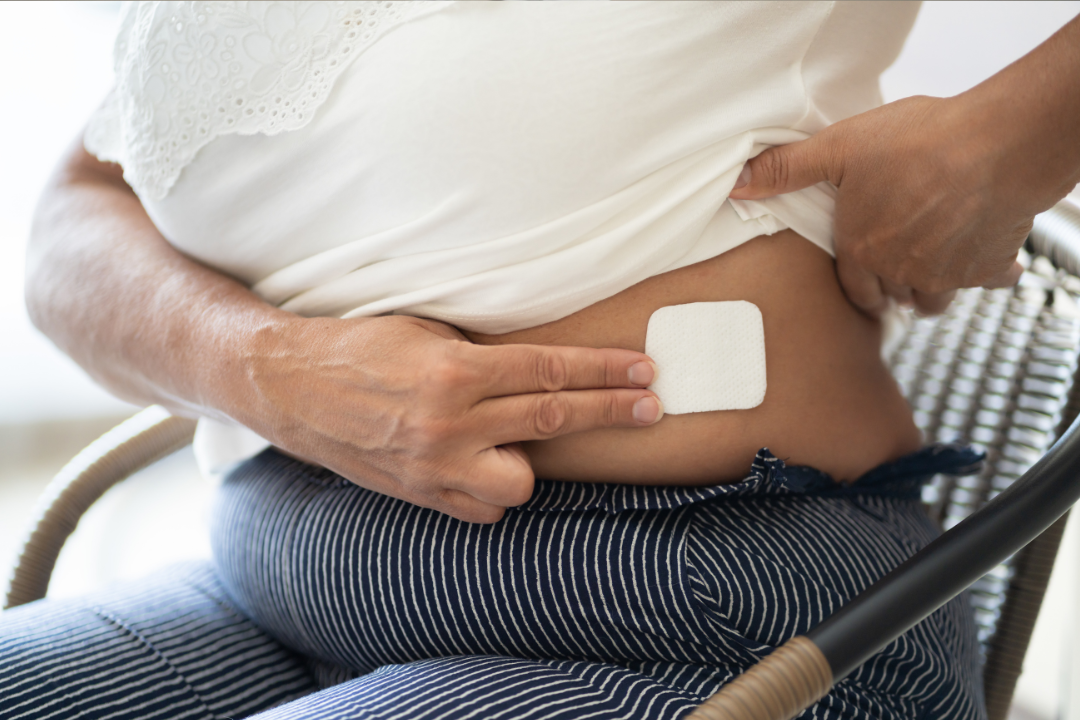
An estrogen patch is a small adhesive patch that sits on the skin and gradually releases estradiol.
Depending on the specific product, patches are typically changed once or twice per week. For example, Estradot is generally changed twice weekly, while Climara is generally changed once weekly.
The patch is usually placed on clean, dry skin on the lower abdomen or buttocks, depending on the manufacturer's instructions. It should not be applied to the breasts.
Why Some Women Prefer the Patch
One of the biggest advantages of the estrogen patch is convenience.
You apply it and then leave it in place for several days. You don't have to remember to apply estrogen every morning or evening.
Patches can also provide relatively consistent delivery of estradiol throughout the day, which can be helpful for maintaining stable hormone levels.
The downside? Some people simply don't like wearing a patch. Adhesive can occasionally cause skin irritation, and patches may sometimes lift or peel, particularly with sweating, swimming, hot tubs, or frequent exercise.
Rotating where you place the patch can help reduce skin irritation.
How Does Estrogen Gel Work?
Estrogen gel also delivers estradiol through the skin, but instead of wearing a patch, you apply a measured amount of gel directly to the skin.
Products such as EstroGel and Divigel are typically applied daily. The exact amount and application instructions depend on the product and your prescribed dose.
After applying the gel, it needs time to dry and absorb into the skin. You'll also want to follow the product instructions regarding bathing, swimming, skin products, and skin-to-skin contact after application.
For some people, adding a daily hormone application to their morning or evening routine is easy. For others, remembering something every single day is less convenient than changing a patch once or twice per week.
Estrogen Patch vs Estrogen Gel: Which Is Better?
The short answer is: neither is automatically better.
Both can be effective ways of delivering systemic estradiol for symptoms associated with perimenopause and menopause.
The biggest differences often come down to lifestyle and personal preference.
An estrogen patch may be a good fit if you:
Prefer something you only need to think about once or twice per week
Want consistent estrogen delivery throughout the day
Don't mind having a visible patch on your skin
Don't experience significant irritation from adhesives
An estrogen gel may be a good fit if you:
Don't like wearing adhesive patches
Have experienced skin irritation from patches
Prefer applying something to your skin rather than wearing it continuously
Can easily incorporate a daily application into your routine
Sometimes the decision is simply practical. If you're constantly forgetting to change your patch, gel might fit your routine better. If you know you'll forget a daily application, a patch may make more sense.
Does One Absorb Better Than the Other?
Both patches and gels are designed to deliver estradiol through the skin, but absorption can vary between individuals.
Someone may have excellent symptom improvement with a relatively low dose of one product while another person may require a different dose or formulation to achieve the same effect.
This doesn't necessarily mean one product is stronger or better. Skin absorption, application technique, adherence, the specific formulation, and individual physiology can all play a role.
This is also why menopause hormone therapy shouldn't simply be about choosing a product and never revisiting it. Symptoms, side effects, bleeding patterns, medical history, and overall response should all be considered when determining whether your current treatment is working well.
What Symptoms Can Transdermal Estrogen Help With?
Systemic estrogen is the most effective treatment for bothersome vasomotor symptoms associated with menopause, including hot flashes and night sweats.
Depending on the individual, menopause hormone therapy may also improve symptoms such as sleep disruption and other symptoms associated with the menopause transition.
Systemic hormone therapy also plays an important role in maintaining bone density and reducing fracture risk while it is being used.
It's important to remember, though, that not every symptom experienced during perimenopause is caused by estrogen alone. Thyroid dysfunction, iron deficiency, sleep disorders, stress, nutritional deficiencies, and other health conditions can sometimes produce very similar symptoms.
What About Progesterone?
If you still have your uterus and are using systemic estrogen, you will generally also need adequate progesterone or another progestogen to protect the lining of the uterus.
Estrogen stimulates the endometrium, which is the tissue lining the uterus. Using systemic estrogen without adequate endometrial protection can cause the lining to become too thick and increase the risk of endometrial hyperplasia and endometrial cancer.
Progesterone provides that protection.
The specific progesterone regimen will depend on factors such as where you are in the menopause transition, your bleeding pattern, your estrogen dose, and your individual medical history.
Is Transdermal Estrogen Safer Than Oral Estrogen?
Oral estrogen passes through the liver before reaching systemic circulation. Transdermal estrogen, including patches and gels, bypasses this first-pass liver metabolism.
Current menopause guidance suggests that the risk of venous blood clots is lower with transdermal estrogen than with oral estrogen. For this reason, transdermal estradiol may be particularly useful when certain cardiovascular or clotting risk factors are present.
That doesn't mean transdermal estrogen is appropriate for everyone. Your personal and family medical history still needs to be considered before starting menopause hormone therapy.
So, Should You Choose an Estrogen Patch or Gel?
If you're deciding between an estrogen patch vs estrogen gel, think less about which one is "best" and more about which one is best for you.
Both are effective transdermal options. Your decision may come down to how often you want to apply your medication, whether your skin tolerates adhesives, how active you are, your previous response to hormone therapy, and which option you're most likely to use consistently.
And sometimes, you simply have to try one.
Menopause hormone therapy often involves some fine-tuning. The first formulation or dose isn't necessarily the one you'll stay on forever. Treatment can be adjusted as symptoms, menstrual cycles, health history, and needs change throughout perimenopause and menopause.
Looking for Perimenopause or Menopause Support in Kelowna?
If you're experiencing symptoms of perimenopause or menopause and wondering whether menopause hormone therapy may be appropriate for you, an individualized assessment can help you understand your options.
At my Kelowna naturopathic practice, I work with patients to assess their symptoms, medical history, lifestyle, and individual risk factors and discuss evidence-based treatment options, including menopause hormone therapy when appropriate.
The goal isn't simply to prescribe estrogen. It's to find an approach that makes sense for your symptoms, your health, and your life.
Ready to discuss your options? Book a perimenopause or menopause consultation in Kelowna.